
When the Lien Release Arrived and the Premium Stayed the Same
You made the final payment three years ago, received the title, and expected the insurance bill to drop. It didn't. Your carrier kept billing the same premium for full coverage because no one at the agency volunteered that collision and comprehensive become optional once the lender no longer requires them. Most retirees in Peoria discover this gap only when an adult child reviews the policy and asks why you're still paying for coverage on a car worth less than two years of premiums.
The decision isn't whether you can drop full coverage. You own the car outright; the coverage is yours to keep or remove. The decision is whether collision and comprehensive still deliver value against what you'd recover in a total-loss claim, and whether liability-only coverage exposes retirement assets you've spent decades building.
Compare rates from carriers that specialize in senior drivers
Mature driver discounts, low-mileage rates, and coverage reviews — see what you're actually eligible for.
Get Your Free QuoteArizona Bodily Injury Minimum Per Person
$25,000
Arizona Revised Statutes 28-4009 sets the state minimum at $25,000 per person, $50,000 per accident for bodily injury, and $15,000 for property damage. That minimum protects the other driver's losses, not yours, and exposes everything you own above those limits in an at-fault accident.
A.R.S. § 28-4009
What Collision Actually Pays When Your Car Is Paid Off
Collision coverage pays the actual cash value of your vehicle at the time of the loss, not what you paid for it and not what a comparable replacement costs today. Actual cash value is the depreciated book value: what a willing buyer would pay for your car in its current condition, mileage, and age. If your 2015 sedan with 92,000 miles books at $4,200, that's the ceiling of what collision pays in a total loss, minus your deductible.
When your collision deductible is $500 and the car's value is $4,200, the maximum net payout is $3,700. If you're paying $68 per month for collision and comprehensive combined, you'll recover the annual premium in a single claim only if the car is totaled or the repair bill exceeds $4,000. Smaller claims don't clear the threshold, and many retirees in Peoria drive well below the mileage that generates frequent collision risk.
Comprehensive covers non-collision losses: theft, hail, vandalism, animal strikes, glass breakage. The same actual-cash-value limit applies. If the car books at $4,200 and is stolen, comprehensive pays $4,200 minus the deductible. Whether that coverage earns its cost depends on Peoria-specific risk, your parking situation, and whether you have the liquidity to self-insure a $4,200 loss without financial hardship.
You're paying to protect an asset that depreciates every year while the premium stays flat or rises. The coverage earns its cost only if a total loss or high-dollar repair happens before depreciation erodes the gap.
The Coverage Decision No One Frames Honestly
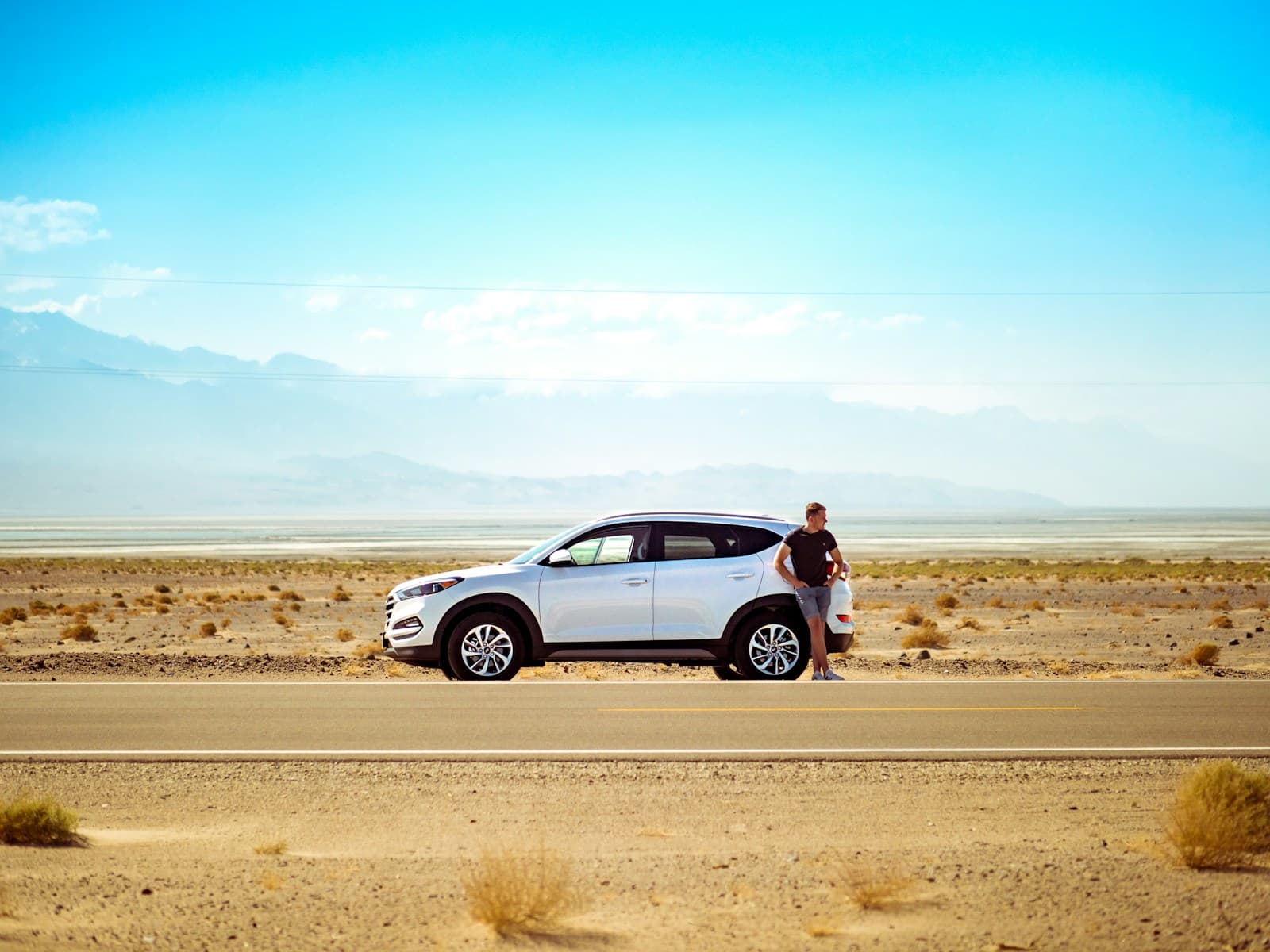
First question: can you absorb a $4,200 loss without touching retirement accounts or disrupting your fixed income? If the answer is yes, and you have the liquidity to replace the car outright or finance a modest replacement at terms you control, collision and comprehensive become optional. You're effectively self-insuring the vehicle's book value. If the answer is no, and losing the car would force a retirement-account withdrawal or a high-interest loan, keeping collision may still justify its cost even on a depreciated asset.
Second question: how many miles are you driving annually, and where are you parking overnight? A retiree driving 4,000 miles per year, parking in a locked garage, and avoiding rush-hour traffic carries meaningfully lower collision risk than the working-age driver commuting 15,000 miles annually on Loop 101. Comprehensive risk depends on whether your Peoria neighborhood sees property crime, whether you park outside, and whether monsoon season brings hail to your zip code. Arizona does not mandate these coverages once the lien is satisfied; the risk you're protecting against is yours to evaluate.
Related Articles


What Happens to Liability When You Drop Full Coverage
Liability coverage is not optional in Arizona. Dropping collision and comprehensive does not reduce your liability limits, and it should not. Bodily injury and property damage liability protect your assets when you cause an accident, and those limits become more important in retirement, not less. You've spent decades building home equity, retirement accounts, and savings; Arizona's $25,000 per person minimum exposes all of it in a serious at-fault accident.
Many retirees in Peoria carry $25,000/$50,000 liability because that's what the lender required or because the agent never explained what happens when you injure someone whose medical bills exceed $25,000. The at-fault driver is personally liable for the excess. A retired couple with $320,000 in home equity and $180,000 in retirement savings can lose it all in a single accident if their liability limits don't cover the injured party's losses. Dropping collision makes sense when the car's value no longer justifies the premium; dropping liability to the state minimum exposes everything you own.
When you drop full coverage, request quotes that increase bodily injury liability to $100,000 per person and $300,000 per accident. The incremental cost is smaller than most retirees expect, and the protection scales with the assets you've accumulated. Some carriers writing in Arizona, including GEICO, Progressive, and State Farm, allow you to drop collision and comprehensive while raising liability limits in the same transaction. The annual premium often drops even with higher liability because collision is the most expensive component on older vehicles.
Carriers Writing Auto Policies in Arizona
25
Twenty-five carriers are confirmed to write auto policies in Arizona, including standard, preferred, and non-standard market tiers. Not all treat retirees equally; some offer mature-driver and low-mileage discounts that others don't file, and some specialize in liability-only policies for paid-off vehicles. Comparing at least three carriers gives you visibility into which programs fit your profile.
NAIC carrier filings, Arizona Department of Insurance
Which Arizona Carriers Handle Liability-Only Policies Well
GEICO, Progressive, and State Farm write liability-only policies in Arizona and allow online quotes without requiring full coverage. All three file mature-driver discounts, though the amounts are set by carrier filing and confirmed only at quote time. GEICO and Progressive both offer usage-based programs that measure mileage directly; if you're driving 4,000 miles annually, the telematics data can lower your rate further than age-based discounts alone.
USAA writes liability-only policies for military-affiliated retirees and files a low-mileage discount separately from its mature-driver program. If you qualify for USAA membership, request both. Nationwide and Allstate write liability-only coverage in Arizona but require phone quotes rather than online self-service; processing time is longer and you'll navigate an agent who earns less commission on liability-only policies. Expect resistance; the agent's incentive is to keep you in full coverage.
Non-standard carriers including The General and Acceptance Insurance write liability-only policies for retirees who've dropped collision, but their base rates run higher than standard-market carriers. If your driving record is clean and you've held continuous coverage, start with standard-market carriers before moving to non-standard options.
The Timing Window Most Retirees in Peoria Miss
Your renewal notice arrives 30 to 45 days before the policy renews. That window is when you compare carriers and request liability-only quotes. If you wait until the renewal date, you're locked into another term at full-coverage rates, and mid-term cancellations trigger short-rate penalties that cost you part of the unused premium. Most carriers in Arizona will not process a coverage-change request inside the final 10 days before renewal; the system treats it as a new policy rather than an endorsement, and you lose continuity credit.
Request quotes from at least three carriers no later than 35 days before your renewal date. Specify liability-only coverage with higher bodily injury limits than you currently carry. If the quote confirms a lower annual premium even with $100,000/$300,000 liability, bind the new policy to start the day your current policy expires. If your current carrier offers a better rate by dropping collision and raising liability, process the endorsement at least 15 days before renewal to ensure it takes effect on time. Missing the window means another six or twelve months at full-coverage rates you no longer need.
What to Do Right Now
Pull your current policy declarations page and note your renewal date, your current liability limits, and the monthly cost of collision and comprehensive. Look up your vehicle's actual cash value using Kelley Blue Book or NADA Guides; use the trade-in value, not the retail value, because that's closer to what an insurer pays in a total loss. Compare your annual collision premium against the car's current book value. If you're paying more than 20 percent of the vehicle's value annually for collision and comprehensive combined, the coverage has crossed into poor-value territory for most retirees.
Request liability-only quotes from GEICO, Progressive, and State Farm with bodily injury limits of at least $100,000 per person and $300,000 per accident. If you're USAA-eligible, add them to the list. Ask each carrier whether they file a mature-driver discount in Arizona and whether completing a state-approved defensive driving course changes the rate further. Arizona does not mandate a mature-driver discount, so confirmation happens at quote time, not by statute. Compare the liability-only quotes against your current full-coverage premium. The decision is yours, and the math is now in front of you.