
The Paid-Off Vehicle Coverage Question
You finished the last car payment, your insurance stayed the same, and nothing about that felt right. Now you're driving less than you did during your working years, the car sits in the garage most days, and your renewal notice shows you're still paying for collision and comprehensive as though you were financing a new vehicle.
Arizona law doesn't require either coverage once the lien is gone. Your state minimums are $25,000 bodily injury per person, $50,000 per accident, and $15,000 property damage. Full coverage is the lender's rule, not the state's. Once the title is yours, the coverage fit becomes a judgment call about your own asset, not a compliance requirement.
Compare rates from carriers that specialize in senior drivers
Mature driver discounts, low-mileage rates, and coverage reviews — see what you're actually eligible for.
Get Your Free QuoteArizona Bodily Injury Minimum Per Person
$25,000
This is the floor liability limit Arizona requires under A.R.S. §28-4009. Collision and comprehensive sit on top of this base; neither replaces your liability obligation, and dropping them leaves your state-required coverage intact.
A.R.S. §28-4009
What Full Coverage Actually Pays For
Full coverage is collision plus comprehensive layered over your liability base. Collision pays to repair your car when you hit another vehicle or object, regardless of fault. Comprehensive pays for theft, vandalism, weather damage, and animal strikes. Both carry a deductible you choose when you set the policy.
Liability insurance pays the other driver's bills when you cause the accident. It never fixes your car. That's collision's job. Comprehensive never touches accident damage either. If a deer hits your windshield, comprehensive covers it. If you rear-end someone, collision covers your car and liability covers theirs.
The lender required both because the car secured the loan. Your car was the collateral. The bank's financial interest ended the day you made the last payment. Now the coverage decision belongs to you, and the math changes based on what your car is worth today versus what you're paying annually to insure its replacement value.
You lack one piece of information that makes this decision unresolvable: your car's current actual cash value versus the annual cost of collision and comprehensive combined.
How Vehicle Value Changes the Math
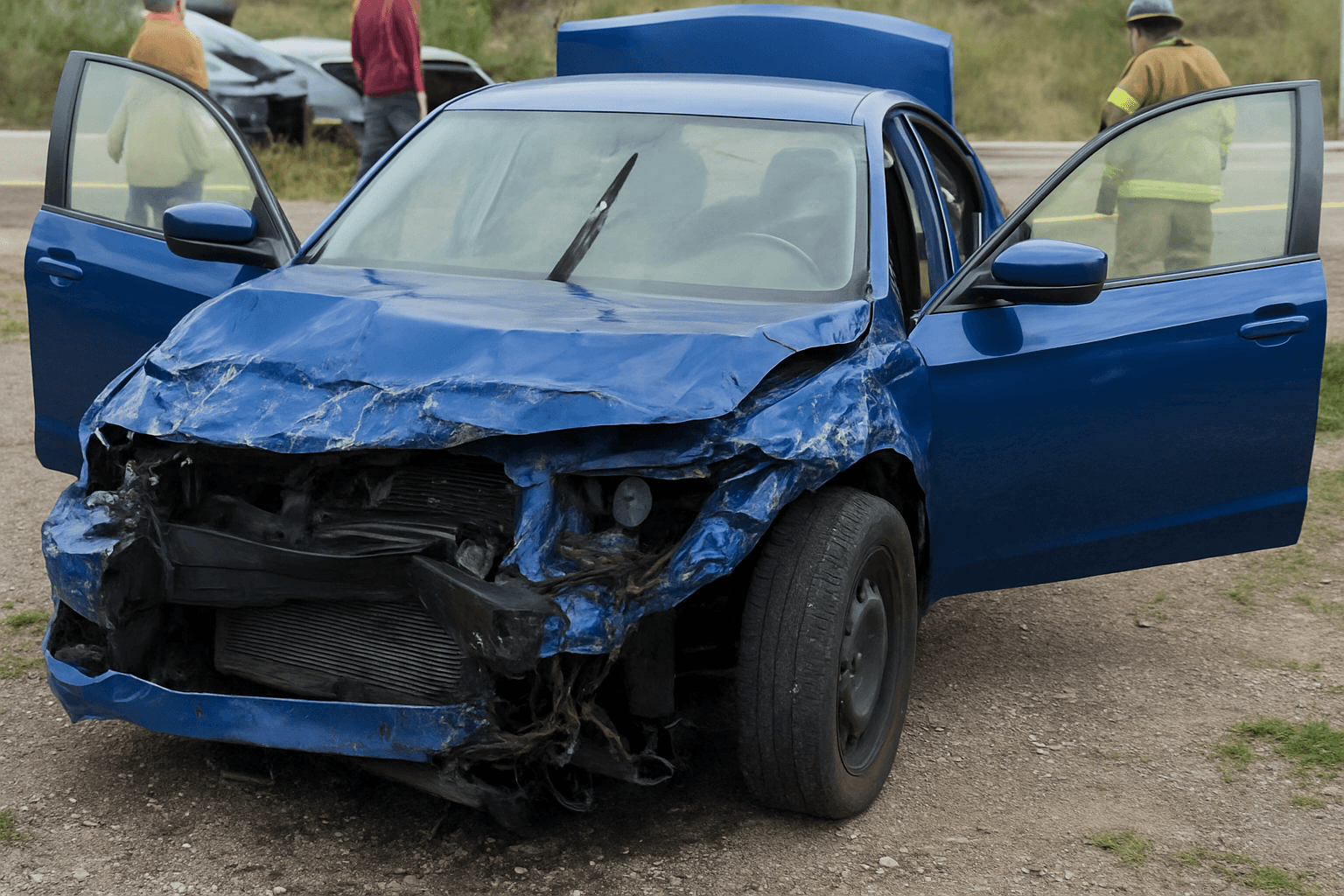
Pull your most recent renewal declaration page. Find the collision and comprehensive premium lines and add them together. That's your annual cost to insure the car's replacement value. Now check your car's actual cash value using your state title, an online valuation tool referencing your VIN and mileage, or your insurer's stated vehicle value on the declarations page. Divide the annual premium by the vehicle value. If the result is above 10 percent, you're paying more to protect the asset than conventional threshold guidance suggests the asset warrants.
A 12-year-old sedan worth $4,200 carrying $600 annual collision and comprehensive premium crosses that line. You're paying 14 percent of the car's value every year to insure against total loss. The deductible eats the first $500 or $1,000 of any claim depending on what you chose, so the coverage only pays out when damage exceeds that floor and the car is repairable. Total loss pays actual cash value minus the deductible. The math tightens every year the car ages and the premium stays flat or rises.
Related Articles




The Middle Ground Competing Pages Miss
Most coverage advice presents this as a binary: keep full coverage or drop to liability only. That framing ignores the fact that collision and comprehensive serve different risks, age differently, and cost different amounts. Comprehensive typically costs one-third to one-half what collision does, and it covers risks that don't decline with your mileage.
Collision risk drops when you drive less. Fewer miles means fewer opportunities to rear-end someone or misjudge a turn. Comprehensive risk doesn't follow your odometer. Hail, theft, and vandalism happen in your driveway. A tree branch doesn't care how many miles you drove last month. If your car sits outside and your neighborhood has had vehicle break-ins, comprehensive coverage may still earn its cost even after collision stops making sense.
Check your declaration page for the split. If collision costs $420 annually and comprehensive costs $180, you can drop collision, keep comprehensive, and cut your non-liability premium by 70 percent while retaining protection against the risks that don't correlate with reduced driving. That middle option doesn't appear in the binary framing, but it's the exact fit for a paid-off car in a retiree's driveway.
State-Specific Realities Arizona Seniors Face
Arizona doesn't mandate personal injury protection or medical payments coverage. You're not required to carry med-pay on top of Medicare. Some seniors keep it anyway because Medicare doesn't cover every accident-related medical cost immediately, but it's optional here. If you're paying for med-pay you don't need, that's another line item to review during the same coverage conversation.
Arizona uses a fault-based system. The at-fault driver's liability pays the other party's bills. If someone hits you and they carry Arizona's minimums, their property damage coverage caps at $15,000. If your paid-off car is worth $4,200 and suffers $3,800 in damage, their liability covers it. If your car is worth $18,000 and suffers $15,000 in damage, their policy pays its limit and you're short $3,000 unless you carry collision to cover the gap. Your car's value relative to the other driver's likely policy limit is part of the replacement-risk math.
Phoenix metro and Tucson see higher vehicle theft rates than rural Arizona counties. Maricopa County and Pima County theft risk makes comprehensive more valuable than it would be in Yavapai or Coconino. Your garaging ZIP code affects the risk profile independent of your mileage. If your car is worth keeping and you park it outside in a higher-theft area, comprehensive often remains the coverage worth holding after collision is dropped.
Carriers Writing Auto Policies in Arizona
25
Twenty-five carriers in the injected data write auto policies in Arizona, spanning preferred, standard, and non-standard market tiers. Not all offer identical approaches to mature-driver profiles or low-mileage discounts, so comparing how each prices reduced-coverage options matters when you're moving away from full coverage.
Carrier licensing data
What to Do Before Your Next Renewal
Call your current carrier or pull your online account. Ask for a same-coverage quote with collision removed, a quote with comprehensive removed, and a quote with both removed. Write down all three annual premiums next to your current full-coverage number. The difference between each option is the decision's dollar value, not a guess.
While you have them on the line, confirm your car's stated value on the policy. Insurers use actual cash value or stated amount depending on the policy form. If the value they're insuring is higher than what the car would sell for today, your premium is inflated relative to the risk. Ask them to adjust the vehicle value to match current market, then re-quote all four scenarios with the corrected figure. That adjustment alone can change whether the 10-percent threshold is crossed.
Compare What Other Carriers Offer
Your current carrier's pricing on reduced-coverage options is one data point. It's not the only one. Carriers treat low-mileage retirees differently. Some offer mileage-based discounts that knock 10 to 20 percent off your premium when you certify annual mileage below 7,500 miles. Others offer usage-based programs that measure actual driving and adjust your rate accordingly. A few specialize in preferred-risk senior profiles and price liability-only or liability-plus-comprehensive combinations more favorably than full-coverage holdovers from your working years.
Get quotes from at least two other carriers writing in Arizona, and specify the same coverage structure: liability at your chosen limits, plus the middle-ground option if comprehensive still makes sense for your situation. State that you're retired, driving under 7,500 miles annually, and ask whether they offer a mature-driver discount or a mileage-based program. Arizona law does not require insurers to offer a senior discount, so it's filed voluntarily by each carrier. Comparing which carriers offer one and at what threshold is the only way to know what you qualify for.
The comparison step is where the decision resolves. One carrier may price liability-only $40 lower per month than your current full-coverage rate. Another may price liability plus comprehensive $25 lower while keeping the theft and weather protection that still fits your risk. The structure that makes sense depends on your car's value, your savings goal, and your neighborhood's theft profile. You can't know which fits until you compare the actual quote numbers across the structures.